Heritage Sounds

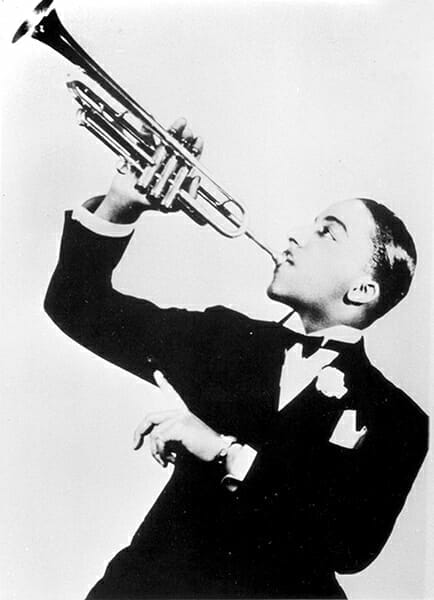
Erskine Hawkins Orchestra – Origins

As we embark on the next Heritage Sounds transcription project, it was time that I updated my web page to reflect the newest bandleader of the moment – Erskine Hawkins! A crowd funding campaign will run now through August 2, 2024 to raise funds to transcribe enough charts for a night of dancing to Hawkins’ repertoire at Lindy Focus, then make the charts available on the Heritage Sounds website, in the hopes that people now and in the future will be able to enjoy live big band performances of this music. As always, you can contribute as little or as much as you like, rewards include sponsoring and entire song as well as some sweet swag that includes a letter jacket (in honor of Hawkins’ ‘Bama State Collegians).

We’ve only just settled on a set list and continue the deep dive into this material. I plan to profile the 11 or so vocalists who recorded with Hawkins’ orchestra, so stay tuned for more information. For now, I’d like to share with you the beginnings of the Hawkins orchestra, which, like many things, begins with a community and teachers. Infinite thanks to Burgin Mathews for his dissertation on Magic City Jazz for his UNC M.A. in Folklore, all of the following is summarized/copied in parts from his research:

John T. “Fess” Whatley was the music teacher at Industrial High School in Birmingham, Alabama, beginning in 1917 as a 21-year-old printing teacher. He built a school band from scratch, with donated instruments and some purchased himself out of a portion of his salary. They would practice on weekends and before/after school and, after 5 months, played their first concert. This and subsequent concerts were such a resounding success with the Black community that, by end of 1918 school year, the school had built an outdoor bandstand to showcase the band and accommodate the needs of the community. After the school band got going, Whatley and other educators added regular “Community Sings,” almost a variety show of local musical and poetic/oratory talent. Band soon became a trade at the high school, not an extracurricular, and it was arguably a more rigorous field of study than other trades at the school, as, in addition to 1/3 of classroom time, students had before/after school and weekend rehearsals, performances, parades, assemblies, dances, and other events/obligations as part of their training. Music was a trade with a path to a middle class income, on par with teaching and ministry, and potentially a ticket to a big city.

Fess Whatley was a trumpet player with a distinct, crisp tone, musical precision, and exacting standards, so it is no surprise that his instruction gave rise to what became the Erskine Hawkins Orchestra. He led Birmingham’s first jazz orchestra, the 10-piece Jazz Demons, starting in 1921. So many people wanted to be trained by Whatley that he had to turn people away. Students graduated and went all over the US and to such faraway places as the Taj Mahal Hotel in India to lead the band there. In addition to Erskine Hawkins gaining national fame, alumni include bandleaders Teddy Hill and Sun Ra.

“At Alabama State Teachers College in Montgomery, three popular jazz bands—the ’Bama State Collegians, the ’Bama State Revelers, and the ’Bama State Cavaliers—became popular touring acts during the Great Depression, raising money for their school wherever they went. During the Second World War, the directors of Army, Navy, and Air Force bands similarly looked to Birmingham for recruits. At the Tuskegee Army Air Field, Whatley musicians helped fill the ranks of the 313th Army Air Force Band and a swinging orchestra, the Imperial Wings of Rhythm.”

The school band’s uniform was, of course, a tuxedo. Allegedly, King Edward VII originated the tuxedo jacket because he requested of his Saville Row tailor something more dressy than a lounge suit, but less formal than a tailsuit. The word tuxedo comes from the Lenni-Lenape Native American tribe, who were allegedly called Tuxedo (meaning “he has a round foot” (which may be in reference to the wolf), “place of the bear” or “clear flowing water”) by their enemies the Algonquins. The Lenni-Lenape lived near a lake which they named “Tucseto,” which later became known as Tuxedo Lake, and the area where they lived was called Tuxedo. In 1885, Pierre Lorillard IV developed a piece of land his grandfather owned in Tuxedo for a summer resort for the wealthy and well-to-do, naming it Tuxedo Park. He then “organized the Tuxedo Club and the Tuxedo Park Association, as hunting and fishing preserve (and society), and surrounded the property with a high game fence. In 1886, he built a club house,” which hosted a number of formal events where the tuxedo jacket became popular, likely a function of the resort and the feeling that it was acceptable to “dress down” (as compared to donning a tailcoat every night). By the time Whatley was leading bands in tuxedos, the ensemble was ubiquitous as the epitome of class and sophistication.

Whatley prioritized sight-reading and playing multiple instruments, to ensure that a musician could jump on a bandstand without rehearsal and so that the musician could fill as many chairs as possible for maximum employment potential. If you told someone you were from Birmingham, they knew you could read and this gave Birmingham musicians an edge in hiring, often without an audition. Whatley did not allow improvisation – what this did was prioritize fundamentals. Learn the rules so you can break them.

Whatley paid his students for their arrangements, incentivizing the creation of charts to build the band’s book and to help his students develop this valuable skill. Hawkins’ band always had at least two arrangers on staff, contributing charts. Whatley’s student Amos Gordon went on to become Louis Armstrong’s arranger in the 1940s.

A noticeable impact on the Hawkins orchestra, outside of the ensemble’s tightness, was the sheer volume of “sweet” arrangements I’ve encountered in reviewing this material, perhaps created or honed from the arrangers’ high school days at Industrial. I also wonder how much of an impact Birmingham’s music taste had on Hawkins’ decision to record so many sweet tunes.

Whatley’s Jazz Demons gained a regional reputation for Birmingham, starting out playing more improvisational, New Orleans style in the 1920s; then evolved into a 14 piece band, the Vibra-Cathedral Orchestra, playing more arranged music in the 1930s; then a full big band Sax-o-Society Orchestra in the 1940s. His band was comprised of his own former and current students. They were booked out months to a year in advance and, if they weren’t available, the high school band would often take its place. Whatley’s students left with knowledge of a vast repertoire of standards, stomps, trad jazz, sweet music, blues, swing, spirituals – they played music from the entire history of jazz.

This is the foundation for Erskine Hawkins’ orchestra – a seasoned group of musicians from this Birmingham jazz tradition, professional performers since their high school years, with a reputation for excellence preceding them and the heights of the swing era to raise them into the national spotlight.

The lineup of the Hawkins orchestra remained almost intact for recordings from July 1936 through the end of 1938, with one tenor saxophone substitution and one vocalist. After that, the next substitution was guitar and another vocalist in October of 1939; guitar again in February 1940; then in June 1940, a trumpet sub, but then we’re back to the original tenor sax player, Paul Bascomb, who subbed out in 1938; then in November 1940 the original trumpet player who subbed out, Wilbur Bascomb, came back, leaving the orchestra with the same lineup for 4+ straight years with the exception of guitar and female vocalist. The orchestra was more than just a band, it was community.

In July 18, 1939, when the band recorded Tuxedo Junction for RCA Victor in New York, it was more than just a song, it was foundational to their home, their training, their music family.

We’d like to welcome Erskine Hawkins to the Lindy Focus family and invite dancers to Lindy Focus on December 30 dance to 30 or so Savoy Ballroom-vetted numbers and hear more about the history of this orchestra from our bandleader, Jonathan Stout; invite musicians and bandleaders to dive into these charts once they are created and share this music with the world; and invite all of you to drop a few dollars in the virtual collection jar, because the only way we keep making these projects a reality is through our mutual love of swing era jazz and the dances it inspired.

Heritage Sounds and the Lindy Focus Transcription Project – Perspectives in Sheet Music Publishing Licensing

Al Cooper, the bandleader of the moment

As we are in the midst of a fourth crowd-funding campaign to transcribe and make available the charts of Black bandleaders and their bands from the swing era, with Al Cooper and the Savoy Sultans as the band for 2023, I wanted to take a moment and highlight the importance of this work and the legal hurdles that often prevent this music from being more widely available and prevent these venerable musicians from being better known by the public. United States copyright law has catered to corporations and their lobbyists (particularly a certain dynastic purveyor of cartoon princesses, endearingly silly critters, and acquirer of a certain multiverse), extending the copyright term well beyond what is beneficial to the artist, focusing on corporate ownership, to the detriment of the public domain. We are dancers of historic American vernacular dances, some approaching an age that would be considered antique if a piece of furniture, and yet we struggle for this music to be available for live performance, competition videos on YouTube, and other media that would benefit from this music being in the public domain.

As a broad generality, for works created after January 1, 1978, copyright protection lasts for the life of the author plus 70 years. Contrast this with Article I, Section 8, Clause 8 of the United States Constitution: “[The Congress shall have Power . . . ] To promote the Progress of Science and useful Arts, by securing for limited Times to Authors and Inventors the exclusive Right to their respective Writings and Discoveries.” In 1790, Congressmen interpreted this to mean 14 years with a potential 14 year renewal, for a total of 28 years. I won’t go into the details of how we went from 14 years to a life (which continues to get longer as medical science evolves) + 70 years, but the only limitation is Congress’s willingness to make the term itself as a limitation (as opposed to copyright in perpetuity), not that the time is particularly limited in its duration

At this point, almost all of the music from the swing era is controlled by corporations and very little of the money is actually going to the artist’s family. None of these artists are alive.

When we embarked on the first transcription project in 2016, to create enough charts for a night of live music and dancing to the Chick Webb Orchestra’s songbook at Lindy Focus, I knew it would be a lot of work to obtain licenses to be able to subsequently publish the sheet music for 30+ songs on the Heritage Sounds website. I did not anticipate the extent of what this meant and how difficult this particular music would be to license. Here is an overview of the steps I took to obtain these licenses:

1. Research the copyright – determine who wrote the song and whether that song is still under copyright. For works published or registered between 1923 and 1977, the maximum copyright duration is 95 years from the date of publication, if copyright was renewed during the 28th year following publication. Since it was 2016 at the time I started this research, if it was written before 1923, the assumption was that the song is in the public domain; if 1923 or after, the assumption was that it was under copyright. When 2019 rolled over, the public domain date went up to 1924 and has continued to proceed without corporate pressure for Congress to enact a new copyright extension. We are now up to works published prior to January 1, 1928 having come into the public domain. The Music Modernization Act is supposed to create a database to help with this kind of research, but since that is still only a concept at this point (that I’m aware of), I would dig through the usual websites to try to determine the creator of the work. I usually start with the Harry Fox database, then move on to ASCAP and BMI, then I do internet searches if those sources fail. Sometimes the liner notes on CDs or records will have helpful information. As of the writing of this blog post, my most recent research found that ASCAP and BMI have combined their searches, so I can use the ASCAP search for both and not have to input queries into two separate websites.

2. Locate the entity that does the music publishing licensing – this is probably the most frustrating part.  Start with the databases at Hal Leonard and Alfred Music – between these two companies, it’s likely that most of what you are seeking to license is controlled by one of these two companies.  If the song you are researching is not in either of these databases, you will have to track it down – no one ever posts information about who does their music publishing licensing, but there is usually information available about who controls the mechanical licensing.  This means that I am web-form-submitting, emailing, and/or calling (or all three) and leaving a message asking who does the music publishing licensing.  Be persistent, someone in these big conglomerates has this information, you just have to figure out who.

3. Determine the parameters of your license – keep in mind that the copyright holder takes 50% of the sales price and, in most cases, the licensee has to pay that 50% upfront for the number of copies you are seeking to obtain permission to sell. It is difficult to figure out how many copies you plan to sell, but more often the consideration is what you can afford in terms of the number of licenses.  Sometimes the licenses will require an annual or bi-annual accounting, but those licenses are in the minority.  Sometimes these middlemen will put a time frame on the license, to incentivize you to sell your copies within that time frame.  A license for digital copies is more cost-effective than a license for paper copies.  You will probably want to limit the scope of your selling, for the purposes of obtaining licenses, to the US, as international distribution is likely to cost more.  The cost is determined by the market and whatever you negotiate – we wanted to keep the cost of the charts pretty low, so I researched charts on several websites and arrived at $30/chart (as compared to the Essentially Ellington charts at $50 a pop).  

Her hopeful face glazed over as she was sent to yet another voicemail inbox…

4. Request a license – Hal Leonard and Alfred Music have online web forms where you submit your request. Others you will have to email with your information – tell them you want a license for X song, written by Y composer(s), to sell Z number of copies priced at $ to sell digital copies in the US. That should be enough to get the ball rolling. The important thing to note is that they don’t have to give you a license – unlike bands who record cover songs, there is no compulsory license for sheet music publishing rights. Heritage Sounds has definitely been denied publishing rights, which seems wild given that licensees are paying up-front for most of these licenses – why would copyright owners refuse cash in hand? Everyone except Hal Leonard has granted me the licenses I have sought on behalf of Heritage Sounds. Though Hal has given us some licenses, they have tended to keep everything at arm’s length, while everyone else I have encountered has been personable, helpful, and responsive to my questions as I navigated this terrain. The time frame varies – sometimes I can get a license within a few weeks; typically, it has taken Hal Leonard 6 months or longer to even respond to my initial request (even though their website lists a much shorter time frame). I still have many outstanding inquiries that have received no response, from Hal Leonard and others, over the course of the three prior transcription projects (Jimmie Lunceford, Lionel Hampton, and the aforementioned Chick Webb).

5.  Review license carefully – read the agreement carefully to ensure you aren’t signing too many rights away to someone and don’t be afraid to ask questions.  Most of these companies have a standard license; in some cases, I have had to draft my own. Once the license is executed, review the terms again and make notes about any actions you need to take, such has time frames for licensing or accounting, notice requirements for what information you need to put on the published sheet music, etc. Managing these licenses, their different time tables, payees, methods of payment, etc. is a meticulous, time-consuming task, one that we should all thank Jaya Dorf for managing.

6. Not every song can be found – sometimes there’s nothing. Sometimes there’s partial information, but not enough to connect you with a composer, lyricist, and/or copyright holder. Sometimes there’s conflicting information. In these instances, I advised the group to hold the owner’s 50% portion of sales for these songs in escrow, should a copyright owner surface.

Patience and organization are key – there was definitely a tracking spreadsheet updated every time I sat down to work on these licenses. Each year builds on the next, as the previously negotiated licenses expire and you may need to seek a renewal, which involves more waiting and creates more work to maintain a catalog of charts.

At this point, I have put in close to 100 hours of work on this project. If you were to pay an attorney do this work and that attorney received the same hourly rate that my employer at the time charged clients for my services, that comes out to $30,000. With Heritage Sounds recouping $15 per chart sold, that would mean having to sell more than 2,000 charts (because taxes) to pay for the legal services to keep this project running. The math does not add up for this to be anything but a labor of love.

But we do love this music and have a mission to make it more accessible for live performance. This music should be celebrated, for its exuberance, its creativity, as a historical marker, and for its contribution to the genre of jazz and other art forms. I wish that more of this licensing money would go to people of color, rather than the corporations who have the resources to either buy out these catalogs (and, in many cases, sit on them) or, as often occurred in the swing era, swindle/negotiate/steal the copyright from the artists creating these works (I’m looking at you, Irving Mills, and everyone who took advantage of Fats Waller when he needed money for alimony). My hope is, as this music slowly comes into the public domain in the next couple of decades, that the focus will remain on the contributions of Black jazz musicians, lyricists, arrangers, and bandleaders; that history will represent them as at least as significant as their white contemporaries; and that we will find more ways to ensure that our resources lift up the Black voices of the swing era.

So where do we go from here with Heritage Sounds? We’ll have to take it one year at a time, one project at a time. We started with a lot of ambition, but the amount of work and the global pandemic slowed things down a bit. Whatever happens, I’ll be along for the ride.

Big Band Revival: Lionel Hampton – Indiegogo Campaign to Fund Chart Transcriptions

42658367_2120897154829766_4192294711219716096_nIt’s live!  This year’s Big Band Revival transcription project bandleader is Lionel Hampton and we’re excited to announce that the song lineup will be three sets of big band tunes and two sets of small group tunes – more music for your listening ears, more bang for your buck in terms of contributing to the project.  If you’re not familiar with the past transcription projects (Chick Webb and Jimmie Lunceford), here’s the abbreviated version:

  1. A lot of this music that we love from the swing era isn’t available in chart form to purchase for big bands to perform.
  2. This Indiegogo campaign goes to fund the transcription of the songs listed in the campaign (and the associated music publishing licensing fees), usually 30 songs, which equates to an entire night of big band swing music for the length of a swing dance; this year there are two extra sets of small group material included.  Fund as little or as much as you like – get some swag or fund an entire song of your choice.  You can listen to all the songs that are a part of this project here.
  3. These charts will be performed at Lindy Focus on December 29 – if you can’t attend in person, there’s a live stream on YouTube
  4. Licenses will be pursued for these charts to be published and available for purchase at a reasonable cost on the Heritage Sounds website for you and/or your local swing/big band to perform for your dancing and listening pleasure.

dw819a

I am personally excited to be delving into the songs performed by Dinah Washington, who appeared with Lionel Hampton’s Orchestra in the 1940’s.  Dinah never recorded any records with Lionel’s orchestra (she did with his small groups), but a number of air check recordings exist of varying audio quality – I’m excited that these big band charts will be getting a second chance, to be heard in greater fidelity, and maybe someone will even record them someday!

Thank you in advance and thanks to everyone who has already donated – the music means so much to all of us, it’s amazing that this level of support exists from all of you who love swing music and want live swing music to continue to be a part of your lives.

All Balboa Weekend 2018

11402932_681723205261725_5157300848427798148_n

Photo by @bobbykatedance

This will be my 12th All Balboa Weekend, attending and/or working in some capacity, and it’s always a joy to bring excellent swing music to these particular shuffling feet.  This year I’ll be singing with Michael Gamble and the Rhythm Serenaders octet on Friday night (June 15) and with the Michael Gamble and the Rhythm Serenaders Orchestra on Saturday night (June 16).  Michael always works in some new material for Balboa dancers and I’m excited to see what he brings to the table for this weekend and also excited to revisit all the wonderful Ella Fitzgerald charts that Michael utilizes to showcase the Heritage Sounds collection of charts (which you can buy on the Heritage Sounds website!).  See you soon, Cleveland!

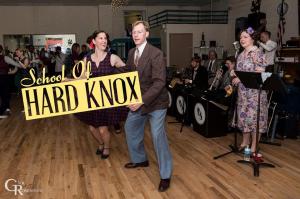
School of Hard Knox – March 23-24, 2018

22730119_1423315634384476_5301930625398209716_nI’ll be Knoxville-bound soon enough, but this is an extra special weekend because Michael Gamble and the Rhythm Serenaders Orchestra will have its debut performance at the Saturday night main dance at School of Hard Knox!  If you’ve been following the transcriptions projects and Indiegogo.com campaigns for Chick Webb, Jimmie Lunceford, and (soon to be launched) Lionel Hampton, you’ll know that Michael has spearheaded this endeavor and has all these great big band charts that should really continue to be heard outside of once a year at Lindy Focus.  It is my understanding that his new orchestra will be a showcase for these charts and bandleaders, so that more people can hear them, learn about them, and spread the love to other bandleaders, educators, music lovers, dancers, really anyone who may take an interest in this music.  Michael will probably also have some other things up his sleeve, so this will, at least in part, be a surprise for me as well!
If you are interested in learning more about what charts are available right now, visit the Heritage Sounds website – we are still in the process of clearing licenses for many more arrangements (which takes a long time), so stay tuned!

If you are interested in dancing, come take classes and dance at School of Hard Knox – there’s a stellar instructor lineup for the weekend, great DJs, and shenanigans to be had!

Big Band Revival: Jimmie Lunceford

20245792_1883076361945181_6443729510126131418_nIn the second installment of transcribing arrangements for an entire night dance music from one swing era bandleader, Jimmie Lunceford is on deck and the Indiegogo campaign is live to raise the funds to transcribe all these arrangements and then make them available to the public for bandleaders to purchase for their own bands to perform (or, as in some cases, for dance communities to purchase for their local big band to perform!)   Michael Gamble covers a lot of bases in the video (posted below and in the Indiegogo campaign, about how the Chick Webb project worked from start to finish (and to print) and how we are doing it all over again to bring Jimmie Lunceford’s orchestra back to life for one dance-long night of music.  Please do watch the video, there are a lot of interesting things about this project, some digging into the national archives for existing arrangements (in whole or in part), and some unique things about Lunceford’s band.  Once again, I’m delighted to be working on the transcription project with a team of people dedicated to making sure this music is performed again! #teamLunceford

Chick Webb Night Live Stream Recording

Here it is, 3 sets (and two encores!) of Chick Webb music in all its glory at Lindy Focus 2016!  As with any tribute, we hope that the band was able to capture the magic of a night at the Savoy Ballroom, with the most famous of the Savoy’s house bands.  Much love to everyone who contributed to the transcription project to make this dream a reality!

Transcriptions by Mark Lopeman, Dan Barrett, and Keenan McKenzie.  Performed by the Jonathan Stout Lindy Focus All-Star Orchestra, with Jonathan Stout (guitar), Chris Dawson (piano), Marquis Howell (bass), Josh Collazo (drums), Gordon Au (trumpet), Ken McGee (trumpet), Jon-Erik Kellso (trumpet), Lucian Cobb (trombone), Dan Barrett (trombone), Albert Alva (reeds), Dan Levinson (reeds), Jonathan Doyle (reeds), Keenan McKenzie (reeds), and Laura Windley (vocals).