
As we are in the midst of a fourth crowd-funding campaign to transcribe and make available the charts of Black bandleaders and their bands from the swing era, with Al Cooper and the Savoy Sultans as the band for 2023, I wanted to take a moment and highlight the importance of this work and the legal hurdles that often prevent this music from being more widely available and prevent these venerable musicians from being better known by the public. United States copyright law has catered to corporations and their lobbyists (particularly a certain dynastic purveyor of cartoon princesses, endearingly silly critters, and acquirer of a certain multiverse), extending the copyright term well beyond what is beneficial to the artist, focusing on corporate ownership, to the detriment of the public domain. We are dancers of historic American vernacular dances, some approaching an age that would be considered antique if a piece of furniture, and yet we struggle for this music to be available for live performance, competition videos on YouTube, and other media that would benefit from this music being in the public domain.
As a broad generality, for works created after January 1, 1978, copyright protection lasts for the life of the author plus 70 years. Contrast this with Article I, Section 8, Clause 8 of the United States Constitution: “[The Congress shall have Power . . . ] To promote the Progress of Science and useful Arts, by securing for limited Times to Authors and Inventors the exclusive Right to their respective Writings and Discoveries.” In 1790, Congressmen interpreted this to mean 14 years with a potential 14 year renewal, for a total of 28 years. I won’t go into the details of how we went from 14 years to a life (which continues to get longer as medical science evolves) + 70 years, but the only limitation is Congress’s willingness to make the term itself as a limitation (as opposed to copyright in perpetuity), not that the time is particularly limited in its duration
At this point, almost all of the music from the swing era is controlled by corporations and very little of the money is actually going to the artist’s family. None of these artists are alive.
When we embarked on the first transcription project in 2016, to create enough charts for a night of live music and dancing to the Chick Webb Orchestra’s songbook at Lindy Focus, I knew it would be a lot of work to obtain licenses to be able to subsequently publish the sheet music for 30+ songs on the Heritage Sounds website. I did not anticipate the extent of what this meant and how difficult this particular music would be to license. Here is an overview of the steps I took to obtain these licenses:
1. Research the copyright – determine who wrote the song and whether that song is still under copyright. For works published or registered between 1923 and 1977, the maximum copyright duration is 95 years from the date of publication, if copyright was renewed during the 28th year following publication. Since it was 2016 at the time I started this research, if it was written before 1923, the assumption was that the song is in the public domain; if 1923 or after, the assumption was that it was under copyright. When 2019 rolled over, the public domain date went up to 1924 and has continued to proceed without corporate pressure for Congress to enact a new copyright extension. We are now up to works published prior to January 1, 1928 having come into the public domain. The Music Modernization Act is supposed to create a database to help with this kind of research, but since that is still only a concept at this point (that I’m aware of), I would dig through the usual websites to try to determine the creator of the work. I usually start with the Harry Fox database, then move on to ASCAP and BMI, then I do internet searches if those sources fail. Sometimes the liner notes on CDs or records will have helpful information. As of the writing of this blog post, my most recent research found that ASCAP and BMI have combined their searches, so I can use the ASCAP search for both and not have to input queries into two separate websites.
2. Locate the entity that does the music publishing licensing – this is probably the most frustrating part. Start with the databases at Hal Leonard and Alfred Music – between these two companies, it’s likely that most of what you are seeking to license is controlled by one of these two companies. If the song you are researching is not in either of these databases, you will have to track it down – no one ever posts information about who does their music publishing licensing, but there is usually information available about who controls the mechanical licensing. This means that I am web-form-submitting, emailing, and/or calling (or all three) and leaving a message asking who does the music publishing licensing. Be persistent, someone in these big conglomerates has this information, you just have to figure out who.
3. Determine the parameters of your license – keep in mind that the copyright holder takes 50% of the sales price and, in most cases, the licensee has to pay that 50% upfront for the number of copies you are seeking to obtain permission to sell. It is difficult to figure out how many copies you plan to sell, but more often the consideration is what you can afford in terms of the number of licenses. Sometimes the licenses will require an annual or bi-annual accounting, but those licenses are in the minority. Sometimes these middlemen will put a time frame on the license, to incentivize you to sell your copies within that time frame. A license for digital copies is more cost-effective than a license for paper copies. You will probably want to limit the scope of your selling, for the purposes of obtaining licenses, to the US, as international distribution is likely to cost more. The cost is determined by the market and whatever you negotiate – we wanted to keep the cost of the charts pretty low, so I researched charts on several websites and arrived at $30/chart (as compared to the Essentially Ellington charts at $50 a pop).

4. Request a license – Hal Leonard and Alfred Music have online web forms where you submit your request. Others you will have to email with your information – tell them you want a license for X song, written by Y composer(s), to sell Z number of copies priced at $ to sell digital copies in the US. That should be enough to get the ball rolling. The important thing to note is that they don’t have to give you a license – unlike bands who record cover songs, there is no compulsory license for sheet music publishing rights. Heritage Sounds has definitely been denied publishing rights, which seems wild given that licensees are paying up-front for most of these licenses – why would copyright owners refuse cash in hand? Everyone except Hal Leonard has granted me the licenses I have sought on behalf of Heritage Sounds. Though Hal has given us some licenses, they have tended to keep everything at arm’s length, while everyone else I have encountered has been personable, helpful, and responsive to my questions as I navigated this terrain. The time frame varies – sometimes I can get a license within a few weeks; typically, it has taken Hal Leonard 6 months or longer to even respond to my initial request (even though their website lists a much shorter time frame). I still have many outstanding inquiries that have received no response, from Hal Leonard and others, over the course of the three prior transcription projects (Jimmie Lunceford, Lionel Hampton, and the aforementioned Chick Webb).
5. Review license carefully – read the agreement carefully to ensure you aren’t signing too many rights away to someone and don’t be afraid to ask questions. Most of these companies have a standard license; in some cases, I have had to draft my own. Once the license is executed, review the terms again and make notes about any actions you need to take, such has time frames for licensing or accounting, notice requirements for what information you need to put on the published sheet music, etc. Managing these licenses, their different time tables, payees, methods of payment, etc. is a meticulous, time-consuming task, one that we should all thank Jaya Dorf for managing.
6. Not every song can be found – sometimes there’s nothing. Sometimes there’s partial information, but not enough to connect you with a composer, lyricist, and/or copyright holder. Sometimes there’s conflicting information. In these instances, I advised the group to hold the owner’s 50% portion of sales for these songs in escrow, should a copyright owner surface.
Patience and organization are key – there was definitely a tracking spreadsheet updated every time I sat down to work on these licenses. Each year builds on the next, as the previously negotiated licenses expire and you may need to seek a renewal, which involves more waiting and creates more work to maintain a catalog of charts.
At this point, I have put in close to 100 hours of work on this project. If you were to pay an attorney do this work and that attorney received the same hourly rate that my employer at the time charged clients for my services, that comes out to $30,000. With Heritage Sounds recouping $15 per chart sold, that would mean having to sell more than 2,000 charts (because taxes) to pay for the legal services to keep this project running. The math does not add up for this to be anything but a labor of love.
But we do love this music and have a mission to make it more accessible for live performance. This music should be celebrated, for its exuberance, its creativity, as a historical marker, and for its contribution to the genre of jazz and other art forms. I wish that more of this licensing money would go to people of color, rather than the corporations who have the resources to either buy out these catalogs (and, in many cases, sit on them) or, as often occurred in the swing era, swindle/negotiate/steal the copyright from the artists creating these works (I’m looking at you, Irving Mills, and everyone who took advantage of Fats Waller when he needed money for alimony). My hope is, as this music slowly comes into the public domain in the next couple of decades, that the focus will remain on the contributions of Black jazz musicians, lyricists, arrangers, and bandleaders; that history will represent them as at least as significant as their white contemporaries; and that we will find more ways to ensure that our resources lift up the Black voices of the swing era.
So where do we go from here with Heritage Sounds? We’ll have to take it one year at a time, one project at a time. We started with a lot of ambition, but the amount of work and the global pandemic slowed things down a bit. Whatever happens, I’ll be along for the ride.


 It’s live! This year’s
 I’ll be Knoxville-bound soon enough, but this is an extra special weekend because
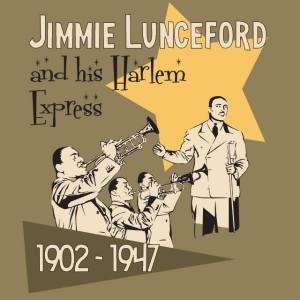 In the second installment of transcribing arrangements for an entire night dance music from one swing era bandleader, Jimmie Lunceford is on deck and the
 Laura Windley – vocals
 One of my favorite swing era bandleaders is Chick Webb, the king of the Savoy Ballroom and jazz drumming trailblazer, who incidentally hired my favorite jazz vocalist, Ella Fitzgerald, for her first gig as the “girl singer” in his band. Chick Webb left this planet too early in 1939 and his legacy of songs lives in the recordings we listen and dance to, but the book of his arrangements is long gone. Seeing a need and an opportunity to bring this music to life again, Michael and Jaya Gamble spearheaded an
  Laura Windley