Lindy Focus

Erskine Hawkins Orchestra – Origins

As we embark on the next Heritage Sounds transcription project, it was time that I updated my web page to reflect the newest bandleader of the moment – Erskine Hawkins! A crowd funding campaign will run now through August 2, 2024 to raise funds to transcribe enough charts for a night of dancing to Hawkins’ repertoire at Lindy Focus, then make the charts available on the Heritage Sounds website, in the hopes that people now and in the future will be able to enjoy live big band performances of this music. As always, you can contribute as little or as much as you like, rewards include sponsoring and entire song as well as some sweet swag that includes a letter jacket (in honor of Hawkins’ ‘Bama State Collegians).

We’ve only just settled on a set list and continue the deep dive into this material. I plan to profile the 11 or so vocalists who recorded with Hawkins’ orchestra, so stay tuned for more information. For now, I’d like to share with you the beginnings of the Hawkins orchestra, which, like many things, begins with a community and teachers. Infinite thanks to Burgin Mathews for his dissertation on Magic City Jazz for his UNC M.A. in Folklore, all of the following is summarized/copied in parts from his research:

John T. “Fess” Whatley was the music teacher at Industrial High School in Birmingham, Alabama, beginning in 1917 as a 21-year-old printing teacher. He built a school band from scratch, with donated instruments and some purchased himself out of a portion of his salary. They would practice on weekends and before/after school and, after 5 months, played their first concert. This and subsequent concerts were such a resounding success with the Black community that, by end of 1918 school year, the school had built an outdoor bandstand to showcase the band and accommodate the needs of the community. After the school band got going, Whatley and other educators added regular “Community Sings,” almost a variety show of local musical and poetic/oratory talent. Band soon became a trade at the high school, not an extracurricular, and it was arguably a more rigorous field of study than other trades at the school, as, in addition to 1/3 of classroom time, students had before/after school and weekend rehearsals, performances, parades, assemblies, dances, and other events/obligations as part of their training. Music was a trade with a path to a middle class income, on par with teaching and ministry, and potentially a ticket to a big city.

Fess Whatley was a trumpet player with a distinct, crisp tone, musical precision, and exacting standards, so it is no surprise that his instruction gave rise to what became the Erskine Hawkins Orchestra. He led Birmingham’s first jazz orchestra, the 10-piece Jazz Demons, starting in 1921. So many people wanted to be trained by Whatley that he had to turn people away. Students graduated and went all over the US and to such faraway places as the Taj Mahal Hotel in India to lead the band there. In addition to Erskine Hawkins gaining national fame, alumni include bandleaders Teddy Hill and Sun Ra.

“At Alabama State Teachers College in Montgomery, three popular jazz bands—the ’Bama State Collegians, the ’Bama State Revelers, and the ’Bama State Cavaliers—became popular touring acts during the Great Depression, raising money for their school wherever they went. During the Second World War, the directors of Army, Navy, and Air Force bands similarly looked to Birmingham for recruits. At the Tuskegee Army Air Field, Whatley musicians helped fill the ranks of the 313th Army Air Force Band and a swinging orchestra, the Imperial Wings of Rhythm.”

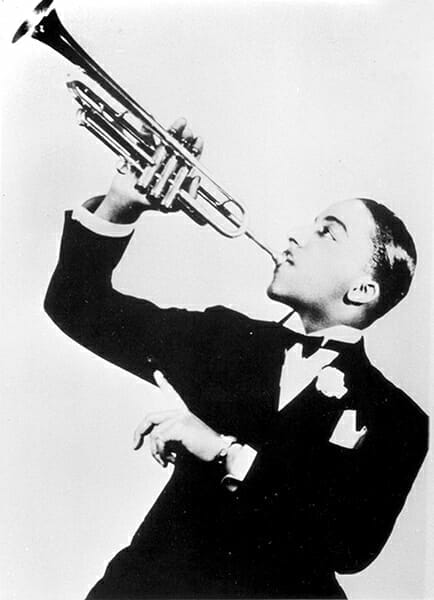
The school band’s uniform was, of course, a tuxedo. Allegedly, King Edward VII originated the tuxedo jacket because he requested of his Saville Row tailor something more dressy than a lounge suit, but less formal than a tailsuit. The word tuxedo comes from the Lenni-Lenape Native American tribe, who were allegedly called Tuxedo (meaning “he has a round foot” (which may be in reference to the wolf), “place of the bear” or “clear flowing water”) by their enemies the Algonquins. The Lenni-Lenape lived near a lake which they named “Tucseto,” which later became known as Tuxedo Lake, and the area where they lived was called Tuxedo. In 1885, Pierre Lorillard IV developed a piece of land his grandfather owned in Tuxedo for a summer resort for the wealthy and well-to-do, naming it Tuxedo Park. He then “organized the Tuxedo Club and the Tuxedo Park Association, as hunting and fishing preserve (and society), and surrounded the property with a high game fence. In 1886, he built a club house,” which hosted a number of formal events where the tuxedo jacket became popular, likely a function of the resort and the feeling that it was acceptable to “dress down” (as compared to donning a tailcoat every night). By the time Whatley was leading bands in tuxedos, the ensemble was ubiquitous as the epitome of class and sophistication.

Whatley prioritized sight-reading and playing multiple instruments, to ensure that a musician could jump on a bandstand without rehearsal and so that the musician could fill as many chairs as possible for maximum employment potential. If you told someone you were from Birmingham, they knew you could read and this gave Birmingham musicians an edge in hiring, often without an audition. Whatley did not allow improvisation – what this did was prioritize fundamentals. Learn the rules so you can break them.

Whatley paid his students for their arrangements, incentivizing the creation of charts to build the band’s book and to help his students develop this valuable skill. Hawkins’ band always had at least two arrangers on staff, contributing charts. Whatley’s student Amos Gordon went on to become Louis Armstrong’s arranger in the 1940s.

A noticeable impact on the Hawkins orchestra, outside of the ensemble’s tightness, was the sheer volume of “sweet” arrangements I’ve encountered in reviewing this material, perhaps created or honed from the arrangers’ high school days at Industrial. I also wonder how much of an impact Birmingham’s music taste had on Hawkins’ decision to record so many sweet tunes.

Whatley’s Jazz Demons gained a regional reputation for Birmingham, starting out playing more improvisational, New Orleans style in the 1920s; then evolved into a 14 piece band, the Vibra-Cathedral Orchestra, playing more arranged music in the 1930s; then a full big band Sax-o-Society Orchestra in the 1940s. His band was comprised of his own former and current students. They were booked out months to a year in advance and, if they weren’t available, the high school band would often take its place. Whatley’s students left with knowledge of a vast repertoire of standards, stomps, trad jazz, sweet music, blues, swing, spirituals – they played music from the entire history of jazz.

This is the foundation for Erskine Hawkins’ orchestra – a seasoned group of musicians from this Birmingham jazz tradition, professional performers since their high school years, with a reputation for excellence preceding them and the heights of the swing era to raise them into the national spotlight.

The lineup of the Hawkins orchestra remained almost intact for recordings from July 1936 through the end of 1938, with one tenor saxophone substitution and one vocalist. After that, the next substitution was guitar and another vocalist in October of 1939; guitar again in February 1940; then in June 1940, a trumpet sub, but then we’re back to the original tenor sax player, Paul Bascomb, who subbed out in 1938; then in November 1940 the original trumpet player who subbed out, Wilbur Bascomb, came back, leaving the orchestra with the same lineup for 4+ straight years with the exception of guitar and female vocalist. The orchestra was more than just a band, it was community.

In July 18, 1939, when the band recorded Tuxedo Junction for RCA Victor in New York, it was more than just a song, it was foundational to their home, their training, their music family.

We’d like to welcome Erskine Hawkins to the Lindy Focus family and invite dancers to Lindy Focus on December 30 dance to 30 or so Savoy Ballroom-vetted numbers and hear more about the history of this orchestra from our bandleader, Jonathan Stout; invite musicians and bandleaders to dive into these charts once they are created and share this music with the world; and invite all of you to drop a few dollars in the virtual collection jar, because the only way we keep making these projects a reality is through our mutual love of swing era jazz and the dances it inspired.

Heritage Sounds and the Lindy Focus Transcription Project – Perspectives in Sheet Music Publishing Licensing

Al Cooper, the bandleader of the moment

As we are in the midst of a fourth crowd-funding campaign to transcribe and make available the charts of Black bandleaders and their bands from the swing era, with Al Cooper and the Savoy Sultans as the band for 2023, I wanted to take a moment and highlight the importance of this work and the legal hurdles that often prevent this music from being more widely available and prevent these venerable musicians from being better known by the public. United States copyright law has catered to corporations and their lobbyists (particularly a certain dynastic purveyor of cartoon princesses, endearingly silly critters, and acquirer of a certain multiverse), extending the copyright term well beyond what is beneficial to the artist, focusing on corporate ownership, to the detriment of the public domain. We are dancers of historic American vernacular dances, some approaching an age that would be considered antique if a piece of furniture, and yet we struggle for this music to be available for live performance, competition videos on YouTube, and other media that would benefit from this music being in the public domain.

As a broad generality, for works created after January 1, 1978, copyright protection lasts for the life of the author plus 70 years. Contrast this with Article I, Section 8, Clause 8 of the United States Constitution: “[The Congress shall have Power . . . ] To promote the Progress of Science and useful Arts, by securing for limited Times to Authors and Inventors the exclusive Right to their respective Writings and Discoveries.” In 1790, Congressmen interpreted this to mean 14 years with a potential 14 year renewal, for a total of 28 years. I won’t go into the details of how we went from 14 years to a life (which continues to get longer as medical science evolves) + 70 years, but the only limitation is Congress’s willingness to make the term itself as a limitation (as opposed to copyright in perpetuity), not that the time is particularly limited in its duration

At this point, almost all of the music from the swing era is controlled by corporations and very little of the money is actually going to the artist’s family. None of these artists are alive.

When we embarked on the first transcription project in 2016, to create enough charts for a night of live music and dancing to the Chick Webb Orchestra’s songbook at Lindy Focus, I knew it would be a lot of work to obtain licenses to be able to subsequently publish the sheet music for 30+ songs on the Heritage Sounds website. I did not anticipate the extent of what this meant and how difficult this particular music would be to license. Here is an overview of the steps I took to obtain these licenses:

1. Research the copyright – determine who wrote the song and whether that song is still under copyright. For works published or registered between 1923 and 1977, the maximum copyright duration is 95 years from the date of publication, if copyright was renewed during the 28th year following publication. Since it was 2016 at the time I started this research, if it was written before 1923, the assumption was that the song is in the public domain; if 1923 or after, the assumption was that it was under copyright. When 2019 rolled over, the public domain date went up to 1924 and has continued to proceed without corporate pressure for Congress to enact a new copyright extension. We are now up to works published prior to January 1, 1928 having come into the public domain. The Music Modernization Act is supposed to create a database to help with this kind of research, but since that is still only a concept at this point (that I’m aware of), I would dig through the usual websites to try to determine the creator of the work. I usually start with the Harry Fox database, then move on to ASCAP and BMI, then I do internet searches if those sources fail. Sometimes the liner notes on CDs or records will have helpful information. As of the writing of this blog post, my most recent research found that ASCAP and BMI have combined their searches, so I can use the ASCAP search for both and not have to input queries into two separate websites.

2. Locate the entity that does the music publishing licensing – this is probably the most frustrating part.  Start with the databases at Hal Leonard and Alfred Music – between these two companies, it’s likely that most of what you are seeking to license is controlled by one of these two companies.  If the song you are researching is not in either of these databases, you will have to track it down – no one ever posts information about who does their music publishing licensing, but there is usually information available about who controls the mechanical licensing.  This means that I am web-form-submitting, emailing, and/or calling (or all three) and leaving a message asking who does the music publishing licensing.  Be persistent, someone in these big conglomerates has this information, you just have to figure out who.

3. Determine the parameters of your license – keep in mind that the copyright holder takes 50% of the sales price and, in most cases, the licensee has to pay that 50% upfront for the number of copies you are seeking to obtain permission to sell. It is difficult to figure out how many copies you plan to sell, but more often the consideration is what you can afford in terms of the number of licenses.  Sometimes the licenses will require an annual or bi-annual accounting, but those licenses are in the minority.  Sometimes these middlemen will put a time frame on the license, to incentivize you to sell your copies within that time frame.  A license for digital copies is more cost-effective than a license for paper copies.  You will probably want to limit the scope of your selling, for the purposes of obtaining licenses, to the US, as international distribution is likely to cost more.  The cost is determined by the market and whatever you negotiate – we wanted to keep the cost of the charts pretty low, so I researched charts on several websites and arrived at $30/chart (as compared to the Essentially Ellington charts at $50 a pop).  

Her hopeful face glazed over as she was sent to yet another voicemail inbox…

4. Request a license – Hal Leonard and Alfred Music have online web forms where you submit your request. Others you will have to email with your information – tell them you want a license for X song, written by Y composer(s), to sell Z number of copies priced at $ to sell digital copies in the US. That should be enough to get the ball rolling. The important thing to note is that they don’t have to give you a license – unlike bands who record cover songs, there is no compulsory license for sheet music publishing rights. Heritage Sounds has definitely been denied publishing rights, which seems wild given that licensees are paying up-front for most of these licenses – why would copyright owners refuse cash in hand? Everyone except Hal Leonard has granted me the licenses I have sought on behalf of Heritage Sounds. Though Hal has given us some licenses, they have tended to keep everything at arm’s length, while everyone else I have encountered has been personable, helpful, and responsive to my questions as I navigated this terrain. The time frame varies – sometimes I can get a license within a few weeks; typically, it has taken Hal Leonard 6 months or longer to even respond to my initial request (even though their website lists a much shorter time frame). I still have many outstanding inquiries that have received no response, from Hal Leonard and others, over the course of the three prior transcription projects (Jimmie Lunceford, Lionel Hampton, and the aforementioned Chick Webb).

5.  Review license carefully – read the agreement carefully to ensure you aren’t signing too many rights away to someone and don’t be afraid to ask questions.  Most of these companies have a standard license; in some cases, I have had to draft my own. Once the license is executed, review the terms again and make notes about any actions you need to take, such has time frames for licensing or accounting, notice requirements for what information you need to put on the published sheet music, etc. Managing these licenses, their different time tables, payees, methods of payment, etc. is a meticulous, time-consuming task, one that we should all thank Jaya Dorf for managing.

6. Not every song can be found – sometimes there’s nothing. Sometimes there’s partial information, but not enough to connect you with a composer, lyricist, and/or copyright holder. Sometimes there’s conflicting information. In these instances, I advised the group to hold the owner’s 50% portion of sales for these songs in escrow, should a copyright owner surface.

Patience and organization are key – there was definitely a tracking spreadsheet updated every time I sat down to work on these licenses. Each year builds on the next, as the previously negotiated licenses expire and you may need to seek a renewal, which involves more waiting and creates more work to maintain a catalog of charts.

At this point, I have put in close to 100 hours of work on this project. If you were to pay an attorney do this work and that attorney received the same hourly rate that my employer at the time charged clients for my services, that comes out to $30,000. With Heritage Sounds recouping $15 per chart sold, that would mean having to sell more than 2,000 charts (because taxes) to pay for the legal services to keep this project running. The math does not add up for this to be anything but a labor of love.

But we do love this music and have a mission to make it more accessible for live performance. This music should be celebrated, for its exuberance, its creativity, as a historical marker, and for its contribution to the genre of jazz and other art forms. I wish that more of this licensing money would go to people of color, rather than the corporations who have the resources to either buy out these catalogs (and, in many cases, sit on them) or, as often occurred in the swing era, swindle/negotiate/steal the copyright from the artists creating these works (I’m looking at you, Irving Mills, and everyone who took advantage of Fats Waller when he needed money for alimony). My hope is, as this music slowly comes into the public domain in the next couple of decades, that the focus will remain on the contributions of Black jazz musicians, lyricists, arrangers, and bandleaders; that history will represent them as at least as significant as their white contemporaries; and that we will find more ways to ensure that our resources lift up the Black voices of the swing era.

So where do we go from here with Heritage Sounds? We’ll have to take it one year at a time, one project at a time. We started with a lot of ambition, but the amount of work and the global pandemic slowed things down a bit. Whatever happens, I’ll be along for the ride.

Lindy Focus Videos – 2019 and 2021

Photograph by the wonderful Rebecca Strickland at Lindy Focus, December 27, 2021

Last month Lindy Focus released just about every song from the 2019 event as individual videos! If you’ve been wanting to hear something, but didn’t feel like scrolling through a 3+ hour live stream, head over to the Lindy Focus YouTube channel and browse the multitude of new content. I’m most proud of “I’m a Slick Chick,” featured on Lionel Hampton night and originally performed by Dinah Washington with the Lionel Hampton Orchestra. Dinah absolutely kills on this recording from a live performance, it’s so inspiring and I was excited to be able to perform it live. The transcript was sponsored by the incredible LaTasha Barnes, to whom I am so grateful for this!

Also new on the Lindy Focus YouTube channel are the live streams from this past year’s Lindy Focus – a little smaller lineup, a little smaller in dancer attendance, fully masked and vaccinated, but nevertheless a celebration of early jazz and swing!

Lindy Focus – December 27, 2021-January 1, 2022

Picking up where we left off, we cautiously move back into position, changed forever, but hopeful that our community can once again be together in a meaningful way. While Lindy Focus may more likely resemble a regional Lindy exchange this year, I have a feeling that the impact will still be strong, particularly for those of us who are still working from home and whose scenes are not running regular dances yet.

Per usual, I am most excited about the music – the musicians and bandleaders this year are all from North Carolina! Our state has a history of producing incredible jazz musicians (Coltrane, Simone, Monk, to name a few) and, for the modern swing dance community, you are already familiar with several bands based in NC – Michael Gamble and the Rhythm Serenaders, Keenan McKenzie and the Riffers, and the Mint Julep Jazz Band. We’ll have some new-to-you faces that we’re excited for you to hear (including bandleader Sean Mason!) and I’m sure there will be some new-to-you tunes that we’ve added to our books during the pandemic.

Above all, be safe – Lindy Focus will be requiring masks/vaccinations and we’ll have to do air hugs, but it will be so good to see any number of you and share in the collective and creative energy that has been missing for so long.

If Lindy Focus is not in your risk budget, we all understand and we’ll see you again in the future – if it is in your risk budget this year, registration is open, the hotel is taking bookings, and I’ll see you soon!

Photo credit to the wonderful Atsuki Takizawa!

Laura on Podcasts – Desert Island Jams and Hey Mister Jesse

A couple of months ago I sat down with UK-based swing DJ, MC, and instructor Sarah Spoon, who had conceived of a brand new, not yet launched podcast called Desert Island Jams, which would feature swing community personalities picking the 10 songs they would take with them to a desert island and talking about those tunes.  Given that dancers are music loving creatures and who doesn’t love a top 10 list, I thought this was brilliant and delighted in my hour or so chatting with Sarah about my list.  Subsequently, Sarah has released episode 1 featuring Ryan Swift of The Track podcast and swing DJ fame and episode 2 featuring swing and house dance powerhouse instructor LaTasha Barnes, both stellar episodes – thus, I’m so very excited that I am episode 3, which came out today!  Come hang out with me and Sarah while we talk about tunes I love and share a lot of fun and laughter.

I also got a shoutout on the August 2020 episode of the long-running Hey Mister Jesse podcast, hosted by Jesse Miner and Manu Smith, featuring music that is of interest to swing dancers.  There have been a number of COVID-19 pandemic album releases and this episode features 8 of them, including Gordon Au’s Tribute to Louis Armstrong and his All-Stars/Live at Lindy Focus, and you can hear me and Jim Ziegler sing and banter on “My Bucket’s Got a Hole In It” – enjoy!

April 2020 COVID-19 Update

It’s amazing how time has seemed to stand still, yet fly by.  I have remained busy, as my day job is deemed essential, but I have also been busier than I thought I would be with various music and other projects.  Here’s a recap of the past month’s projects:

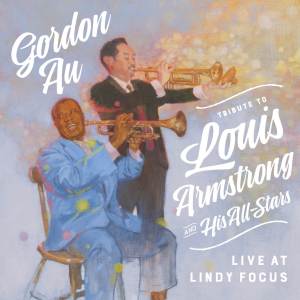
Gordon Au’s Tribute to Louis Armstrong and his All-Stars – Live at Lindy Focus was released on April 15 – this was such a special night of music and we are all very pleased with how this album came out, particularly since none of us had anticipated releasing the recordings from that night and we had only really run through half the tunes in rehearsal that day before performing Gordon’s wonderful arrangements.  This album is full of joy, so if you need some of that in your life right now, this would be a great investment in happiness.  Visit Bandcamp to download this digital release.

Keenan McKenzie put together a virtual collaboration of video/recording of his lovely song The Dwindling Light by the Sea, with yours truly reprising vocals, Lucian Cobb on trombone, Jonathan Stout on guitar, James Posedel on piano, William Ledbetter on bass, and Dan Faust on drums.  Here’s another recording, this time with visual, to add some joy to your day.  If you’d like to see more collaborations organized by Keenan, please consider donating to his virtual tip jar at VENMO: @keenanmckenziemusic OR
PAYPAL: paypal.me/keenanmckenziemusic

On another musical note, Bandcamp is doing musicians affected by the pandemic another solid and reprising their waiver of the revenue share for all sales on Bandcamp – this is in effect May 1, June 5, and July 3 (the first Friday of each month) from midnight to midnight PDT on each day.  If you’ve been planning to buy music, you can do the most good for musicians by purchasing on these particular dates.

On April 9, 2020, I DJ’ed (along with several of my fellow swing band leaders- Jonathan Stout, Michael Gamble, Brooks Prumo, Jonathan Ng, and house DJ Rickard Johansson) for the Global Online Social, a DJ’ed virtual dance party on Zoom and Twitch organized by Paul Riding that features new DJs every Thursday, playing swing music for a good portion of the day.  Maybe you dance, maybe you just need some swing music to keep you motivated as you work, but it’s a lot of fun – consider tuning in!

Finally, I’ve released three more episodes of Lindy Shopper’s Closet, the YouTube series spinoff of my Lindy Shopper blog, covering the topics of moth prevention, my favorite swing dance shoes, and dance undergarments, all posted below – please subscribe to my YouTube channel (I’ll eventually get back to posting music, too) and enjoy!

Tribute to Louis Armstrong & His All​-​Stars / Live at Lindy Focus

In light of the present pandemic and the cancellation of events and gigs for so many musicians everywhere, Gordon Au decided that his “involuntary unpaid sabbatical” project would be to put together an album from the live recordings of his Louis Armstrong All-Stars Tribute at Lindy Focus and give the proceeds to the musicians who participated in this tribute who rely on music income to meet their needs.  The lineup for the Armstrong tribute includes our fearless leader, transcriber, and arranger Gordon Au plus Jonathan Stout, Josh Collazo, Jen Hodge, Jacob Zimmerman, Keenan McKenzie, Lucian Cobb, Jim Ziegler, and yours truly.

You can pre-order the album and listen to the first track on Bandcamp now – the album is $15 with an option to give a larger donation and all the pre-order profits will go to the musicians on the album.  The album is scheduled to be released on April 15, 2020.

This performance was not live streamed from Lindy Focus because it was a late night, but I can tell you that the energy in the room was a unique electricity felt by all and I’m eager to hear the mixes for this album because we had a blast performing it.  Did I mention we only had one rehearsal and didn’t get to run all the songs?  I’m blessed to work with such pros to pull something like this off.  I don’t know if you’ll get to hear any of Gordon’s insightful narration, but I hope that his thoughtfulness and love for Armstrong shine through even without the words.

I love this quote from Gordon on the Bandcamp page:

“I grew up listening to Louis Armstrong. Last year I had the chance to do something I’ve wanted to do for a long time: bring the music of Louis & the All-Stars to swing dancers. I heard a few hip DJs play Louis for lindy hoppers over the years, but I always wished there was more, and I knew that I myself would love dancing to the All-Stars. I wanted to give dancers the chance to hear the music of the All-Stars with a live band, and to dance to it and fall in love with it.

Last December, that wish came true. At Lindy Focus XVIII, I presented a tribute to Louis Armstrong & His All-Stars with a dream team of 10 musicians, and finally got to share that music I love with hundreds of people dancing their hearts out, late at night in a packed ballroom, surrounded by smiling faces, at the largest lindy hop event in the nation. And I now I’m happy to share it with all of you.”

I’ll also give a shout out to the incredible artist Conan Zhao who painted the album artwork before this album was even a thought – the timing of its completion and the pandemic hitting the US is rather serendipitous and it’s just perfect.

Consider supporting this project by pre-ordering the album – if you love jazz and/or you’ve always wanted a Lindy Focus live album, this is the ticket!

Lindy Focus XVIII Videos

Always a huge highlight on my calendar, Lindy Focus did not disappoint this year.  I performed at each main dance with the Jonathan Stout Lindy Focus All-Star Orchestra, but also did two late night dances – one with Michael Gamble and the Rhythm Serenaders and another with Gordon Au‘s tribute to the Louis Armstrong All-Stars.  Dance performances kicked off each late night social dance, with the performers having the option of doing a routine with the live band of the night.  I was delighted to be a part of three of these late night performances: first, with the Rhythm Serenaders performing Mildred Bailey’s “Lover Come Back to Me” with Peter Kertz and Elze Visnevskyte dancing; second and third with Au’s Armstrong tribute, performing “Squeeze Me” and “All That Meat and No Potatoes” with co-vocals by Jim Ziegler and a cast of Lindy Focus instructors and performers.

I’m posting the three late night performances below.  If you’re looking for a nice, long listen, you can revisit the live stream broadcasts for each of 5 nights of big band music (Basie, Ellington, Webb, Hampton, and anything goes on NYE) on the Lindy Focus YouTube channel.

A Bull City Holiday – Kickstart an Album of Original Swing Music by Keenan McKenzie

img_8926Keenan McKenzie has assembled over 20 North Carolina-based musicians (including yours truly) to appear on his album of original holiday swing tunes written by the maestro himself.  I had the honor of providing vocals for Keenan’s debut album of original music, Forged in Rhythm, and I’m excited to be working with him again on new material for dancers and also to be working with some of my favorite local musicians.  We’ll be recording at Overdub Lane in August, 2019 with ensembles ranging from small group swing to big band.

As with any recording project, nothing is free, but Keenan’s crunched the numbers and launched a reasonable Kickstarter campaign – only $5,500 – which I like to think of as pre-sales for an album you’ll want to buy anyway.  Keenan’s also got some great rewards, like private lessons or him transcribing a big band arrangement of your choice that will debut at Lindy Focus this year!  Don’t tarry, the campaign is only up until August 21.

Lindy Focus Live Streams

49389785_10106364699103798_873451577543753728_n

Chick Webb night 2018, thanks to the fab Hilary Mercer Photography

My biggest recurring gig of the past few years is definitely Lindy Focus – five nights of big band music with the Jonathan Stout Lindy Focus All Star Orchestra, with new songs added each year and, for the past three years, an entirely new bandleader’s night of music is performed, thanks to crowd funding from our stellar community of swing music supporters.  This year’s lineup from start to finish was Jimmie Lunceford (crowd funded in 2017), Benny Goodman, Lionel Hampton (crowd funded in 2018), Chick Webb (crowd funded in 2016), and “Kitchen Sink Night” on New Year’s Eve, featuring an array of swing era arrangements.  All of the main dances are Lindy Focus are live streamed on YouTube, which means you can always go back and listen to the music from each night of dancing later!  Here are all the live streams from December 27 through December 31, 2018 – I’m featured, in some way or another, as a vocalist on each night, with a vocal trio on Lunceford night and as a featured vocalist on the other four nights.  Put some on while you’re doing chores or on a long drive for some toe-tapping tunes!