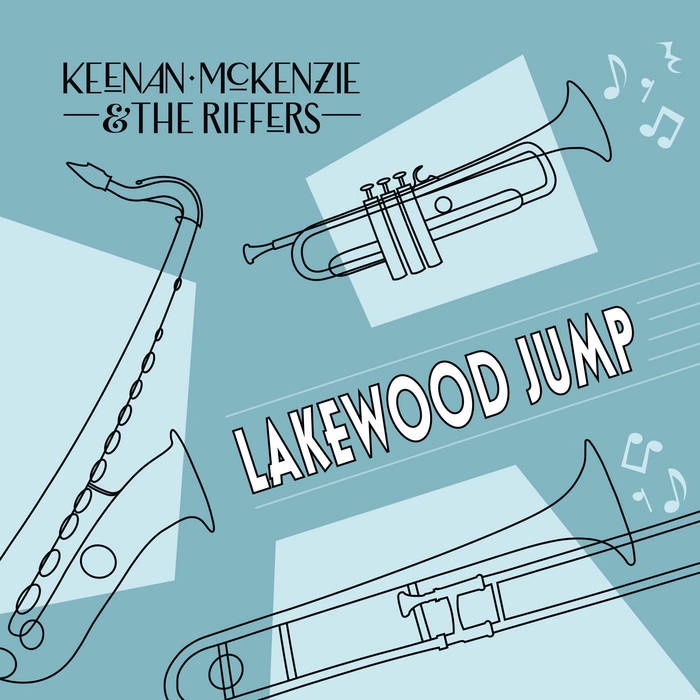
Being a part of album projects never gets old, so I’m delighted to announce that Keenan McKenzie and the Riffers have released a new album called Lakewood Jump! Recorded in August of 2023 at Magnetic Sound Studios in the Lakewood area of Durham, NC, it’s been more than a year in the making, with some planned and unplanned delays involved in its production.
The album is a mix of originals, classics, and some lesser known gems of the jazz world. It was an absolute pleasure to record this, less than 10 minutes from my house, and with Cocoa Cinnamon coffee across the street to sustain me. Available on Bandcamp, digital and (soon, as of the date of this post) vinyl, I’m singing on 7 tracks – enjoy!
As we are in the midst of a fourth crowd-funding campaign to transcribe and make available the charts of Black bandleaders and their bands from the swing era, with Al Cooper and the Savoy Sultans as the band for 2023, I wanted to take a moment and highlight the importance of this work and the legal hurdles that often prevent this music from being more widely available and prevent these venerable musicians from being better known by the public. United States copyright law has catered to corporations and their lobbyists (particularly a certain dynastic purveyor of cartoon princesses, endearingly silly critters, and acquirer of a certain multiverse), extending the copyright term well beyond what is beneficial to the artist, focusing on corporate ownership, to the detriment of the public domain. We are dancers of historic American vernacular dances, some approaching an age that would be considered antique if a piece of furniture, and yet we struggle for this music to be available for live performance, competition videos on YouTube, and other media that would benefit from this music being in the public domain.
As a broad generality, for works created after January 1, 1978, copyright protection lasts for the life of the author plus 70 years. Contrast this with Article I, Section 8, Clause 8 of the United States Constitution: “[The Congress shall have Power . . . ] To promote the Progress of Science and useful Arts, by securing for limited Times to Authors and Inventors the exclusive Right to their respective Writings and Discoveries.” In 1790, Congressmen interpreted this to mean 14 years with a potential 14 year renewal, for a total of 28 years. I won’t go into the details of how we went from 14 years to a life (which continues to get longer as medical science evolves) + 70 years, but the only limitation is Congress’s willingness to make the term itself as a limitation (as opposed to copyright in perpetuity), not that the time is particularly limited in its duration
At this point, almost all of the music from the swing era is controlled by corporations and very little of the money is actually going to the artist’s family. None of these artists are alive.
When we embarked on the first transcription project in 2016, to create enough charts for a night of live music and dancing to the Chick Webb Orchestra’s songbook at Lindy Focus, I knew it would be a lot of work to obtain licenses to be able to subsequently publish the sheet music for 30+ songs on the Heritage Sounds website. I did not anticipate the extent of what this meant and how difficult this particular music would be to license. Here is an overview of the steps I took to obtain these licenses:
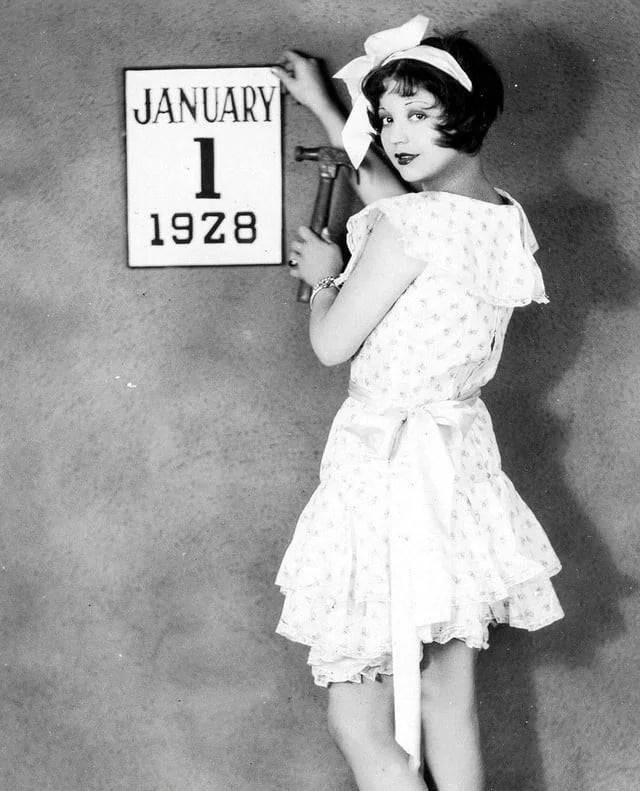
1. Research the copyright – determine who wrote the song and whether that song is still under copyright. For works published or registered between 1923 and 1977, the maximum copyright duration is 95 years from the date of publication, if copyright was renewed during the 28th year following publication. Since it was 2016 at the time I started this research, if it was written before 1923, the assumption was that the song is in the public domain; if 1923 or after, the assumption was that it was under copyright. When 2019 rolled over, the public domain date went up to 1924 and has continued to proceed without corporate pressure for Congress to enact a new copyright extension. We are now up to works published prior to January 1, 1928 having come into the public domain. The Music Modernization Act is supposed to create a database to help with this kind of research, but since that is still only a concept at this point (that I’m aware of), I would dig through the usual websites to try to determine the creator of the work. I usually start with the Harry Fox database, then move on to ASCAP and BMI, then I do internet searches if those sources fail. Sometimes the liner notes on CDs or records will have helpful information. As of the writing of this blog post, my most recent research found that ASCAP and BMI have combined their searches, so I can use the ASCAP search for both and not have to input queries into two separate websites.
2. Locate the entity that does the music publishing licensing – this is probably the most frustrating part. Start with the databases at Hal Leonard and Alfred Music – between these two companies, it’s likely that most of what you are seeking to license is controlled by one of these two companies. If the song you are researching is not in either of these databases, you will have to track it down – no one ever posts information about who does their music publishing licensing, but there is usually information available about who controls the mechanical licensing. This means that I am web-form-submitting, emailing, and/or calling (or all three) and leaving a message asking who does the music publishing licensing. Be persistent, someone in these big conglomerates has this information, you just have to figure out who.
3. Determine the parameters of your license – keep in mind that the copyright holder takes 50% of the sales price and, in most cases, the licensee has to pay that 50% upfront for the number of copies you are seeking to obtain permission to sell. It is difficult to figure out how many copies you plan to sell, but more often the consideration is what you can afford in terms of the number of licenses. Sometimes the licenses will require an annual or bi-annual accounting, but those licenses are in the minority. Sometimes these middlemen will put a time frame on the license, to incentivize you to sell your copies within that time frame. A license for digital copies is more cost-effective than a license for paper copies. You will probably want to limit the scope of your selling, for the purposes of obtaining licenses, to the US, as international distribution is likely to cost more. The cost is determined by the market and whatever you negotiate – we wanted to keep the cost of the charts pretty low, so I researched charts on several websites and arrived at $30/chart (as compared to the Essentially Ellington charts at $50 a pop).
Her hopeful face glazed over as she was sent to yet another voicemail inbox…
4. Request a license – Hal Leonard and Alfred Music have online web forms where you submit your request. Others you will have to email with your information – tell them you want a license for X song, written by Y composer(s), to sell Z number of copies priced at $ to sell digital copies in the US. That should be enough to get the ball rolling. The important thing to note is that they don’t have to give you a license – unlike bands who record cover songs, there is no compulsory license for sheet music publishing rights. Heritage Sounds has definitely been denied publishing rights, which seems wild given that licensees are paying up-front for most of these licenses – why would copyright owners refuse cash in hand? Everyone except Hal Leonard has granted me the licenses I have sought on behalf of Heritage Sounds. Though Hal has given us some licenses, they have tended to keep everything at arm’s length, while everyone else I have encountered has been personable, helpful, and responsive to my questions as I navigated this terrain. The time frame varies – sometimes I can get a license within a few weeks; typically, it has taken Hal Leonard 6 months or longer to even respond to my initial request (even though their website lists a much shorter time frame). I still have many outstanding inquiries that have received no response, from Hal Leonard and others, over the course of the three prior transcription projects (Jimmie Lunceford, Lionel Hampton, and the aforementioned Chick Webb).
5. Review license carefully – read the agreement carefully to ensure you aren’t signing too many rights away to someone and don’t be afraid to ask questions. Most of these companies have a standard license; in some cases, I have had to draft my own. Once the license is executed, review the terms again and make notes about any actions you need to take, such has time frames for licensing or accounting, notice requirements for what information you need to put on the published sheet music, etc. Managing these licenses, their different time tables, payees, methods of payment, etc. is a meticulous, time-consuming task, one that we should all thank Jaya Dorf for managing.
6. Not every song can be found – sometimes there’s nothing. Sometimes there’s partial information, but not enough to connect you with a composer, lyricist, and/or copyright holder. Sometimes there’s conflicting information. In these instances, I advised the group to hold the owner’s 50% portion of sales for these songs in escrow, should a copyright owner surface.
Patience and organization are key – there was definitely a tracking spreadsheet updated every time I sat down to work on these licenses. Each year builds on the next, as the previously negotiated licenses expire and you may need to seek a renewal, which involves more waiting and creates more work to maintain a catalog of charts.
At this point, I have put in close to 100 hours of work on this project. If you were to pay an attorney do this work and that attorney received the same hourly rate that my employer at the time charged clients for my services, that comes out to $30,000. With Heritage Sounds recouping $15 per chart sold, that would mean having to sell more than 2,000 charts (because taxes) to pay for the legal services to keep this project running. The math does not add up for this to be anything but a labor of love.
But we do love this music and have a mission to make it more accessible for live performance. This music should be celebrated, for its exuberance, its creativity, as a historical marker, and for its contribution to the genre of jazz and other art forms. I wish that more of this licensing money would go to people of color, rather than the corporations who have the resources to either buy out these catalogs (and, in many cases, sit on them) or, as often occurred in the swing era, swindle/negotiate/steal the copyright from the artists creating these works (I’m looking at you, Irving Mills, and everyone who took advantage of Fats Waller when he needed money for alimony). My hope is, as this music slowly comes into the public domain in the next couple of decades, that the focus will remain on the contributions of Black jazz musicians, lyricists, arrangers, and bandleaders; that history will represent them as at least as significant as their white contemporaries; and that we will find more ways to ensure that our resources lift up the Black voices of the swing era.
So where do we go from here with Heritage Sounds? We’ll have to take it one year at a time, one project at a time. We started with a lot of ambition, but the amount of work and the global pandemic slowed things down a bit. Whatever happens, I’ll be along for the ride.
[EDITED TO ADD that, after much effort, patience, and the kindness of friends of friends, I am back on Facebook. I’m leaving this post up for posterity, as I’m sure this lack of customer service will continue.)
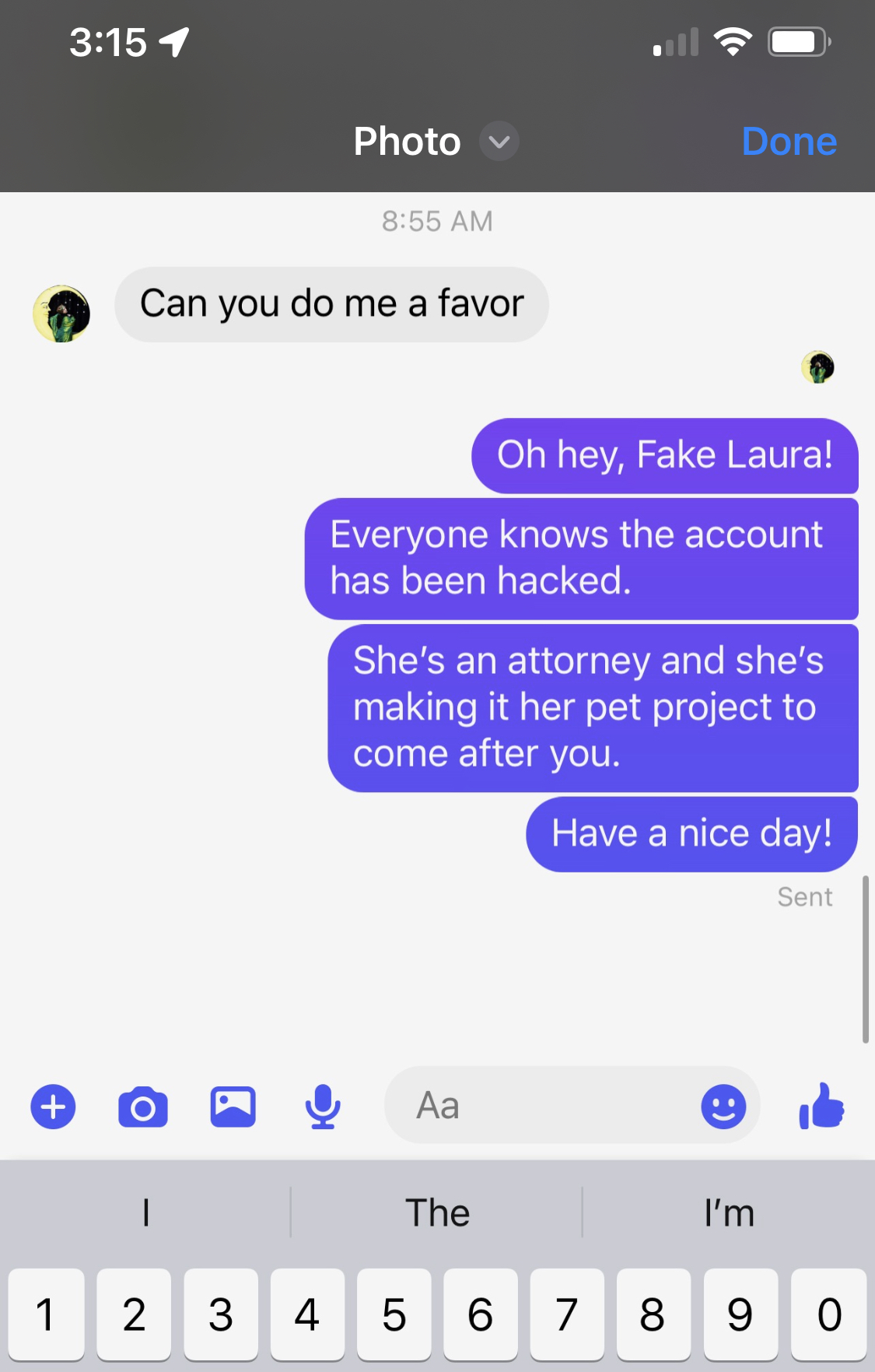
The Nigerian/Australian/Alabamian* scammer/hacker must have hit the jackpot when they found the Balboa community on Facebook -a close-knit group of kind individuals with years of positive interactions that built trust and mutual respect. Just the kind of people who didn’t think twice about helping a friend, who turned out to be someone fraudulently accessing their friend’s account to gain access to their account so that the cycle could continue indefinitely. Please note that I would never send you a link to a business/investment scheme and I would never ask you for $200 via Messenger, as all my financial requests are done in public and usually involve supporting a non-profit, the arts, and/or a transaction in exchange for music/swag.
It might not have been as bad if it hadn’t occurred on a Monday morning. I subsequently had a busy day at work and didn’t get back to thinking about Facebook until around 8:00 p.m. that night. By that time, the hacker had changed my email, telephone number, and password. Facebook sent me emails after these changes with links to “secure your account,” but the hacker had already changed all information that I would use to secure my account, so this was useless. I spiraled, going through the steps on the Facebook Help Center page for Hacked and Fake Accounts over and over – sometimes it would be a Sysiphian loop going nowhere and sometimes it would lead me to a step that I thought would allow me access, only to deny the access because [insert one of several error messages].
I submitted a copy of my drivers license to Facebook twice in an attempt to recover my account. I attempted to re-set my password upon prompts from this submission and both times I received an error message that I had “entered too many codes.”
I had a brief moment of hope when I was taken through a loop that allowed me to add a second email to my account to receive recovery codes. The main issue with this is that, every time I requested a code, the hacker would also receive the email and be notified of my attempts to recover my account. None of the codes Facebook sent me worked – Facebook sent me five recovery codes via email and, every time I would enter a code, an error message would tell me I had an incorrect code.
In less than 24 hours, the hacker figured out what I was doing and removed the second email from my Facebook account. I received an email asking if I had removed the email from my account and was provided the same link to “secure your account,” which, again, asked for the hacker’s password and would only send recovery links to the hacker’s phone and email.
Thanks to Frankie Hagan for this absolute gem!
Meanwhile, I received text messages every 15 minutes from friends asking if my account is hacked or letting me know that they received a strange message from me on Facebook. This continued for four days. This was incredibly stressful, being constantly reminded that a stranger was in my personal virtual space on Facebook, impersonating me and taking advantage of the trust I built with my friends and the goodwill I built with my businesses and my various positions in the swing dance community.
Other things I did to try to get Facebook’s attention and/or recover my account:
Filed a complaint with the North Carolina Attorney General’s office – I received a generic email response acknowledging the receipt of my complaint. “We’ll review your complaint and work with you and the business to try to reach a resolution of your dispute.” It’s been two weeks, nothing more has happened.
Filed a complaint with the California Attorney General’s office – no email confirmation from this, but I did print out the screen I was told to print that confirmed my submission. No word from them, either.
Ranted on Twitter @laurawindley – this has worked in the past with other businesses who have blown me off for months, but Facebook is the honey badger of customer service, even when threatened with a small claims action and me personally showing up on their doorstep in California. It also had the unwanted side-effect of attracting bots and other scammers who claimed they could recover my account for me.
Ranted on Instagram @mintjulepjazzband – I have a more supportive community on IG than Twitter, so this was more for catharsis and to let my friends know I’m still alive, but had the same unwanted scammers/hackers/bots messaging me about account recovery.
Filed a copyright infringement claim with Facebook – this was denied. Hacker stole my IP and used it to defraud my friends out of money, but whatever, I get it.
Filed a trademark infringement claim with Facebook – I felt like I had a much more compelling argument here: “A hacker who has cut off access to my business Facebook account is using my trademark and its associated goodwill to ask for money from fans of the band. I am attaching photos of message I received, indicating that people received requests for money from the hacker. Several messages are sent by an intermediary/personal acquaintance because I have no other connection to them other than my business with the associated trademark. Please see attachments for screen shots of messages. Prior to the hacker, I had been asking publicly on the band website, Facebook page, and in the Facebook event for advance tips/donations for the Mint Julep Jazz Band sponsored event, the Orchard Park Jazz Picnic, so the timing of the hacker’s requests for money while posing as me/my band could seem legitimate. I have been using Mint Julep Jazz Band as a trademark for my band since 2011. The band has released 3 studio albums, our music has been aired on Sesame Street (the Jon Hamm episode), we’ve performed at Lincoln Center, and last month the band had 22,000 listeners on Spotify. Please get this guy out of my account so I can continue to run my business.” Facebook disagreed. The only resolution they offered was to terminate the Mint Julep Jazz Band Facebook page.
A friend who was also hacked tried the two phone numbers listed online for Facebook, both of which are recordings that direct you to the Facebook Help Center.
When friends texted me about being messaged by the hacker, I asked them to report my account as hacked. Facebook subsequently directed my friends to share the Facebook Help Center page with me.
I know that most people use Facebook casually or to share photos of their kids, but I use Facebook primarily for business and both disseminating and receiving information about the swing dance community, which is tied to both my personal joy and my business. Facebook is the primary means of communication for the swing dance community. Business metrics are important – people care about how many fans/likes you have, how many people you engage with on social media, and Facebook is a critical component.
Here’s what I need to be communicating and have been denied the ability to reach the broadest audience through (unfortunately) the most effective means of communication with friends and fans:
The Empower Foundation fundraiser – “The mission of the Empower Dance Foundation is to provide access to professional dance classes for all children and youth ages 2-18. Empower seeks to eliminate the barriers of economic inequality, racism and representation for young people.” I’m excited to be serving on The Empower Foundation’s Board and help in their fundraising endeavors. This is a chance to promote beauty, creativity, diversity, and opportunity – we are not powerless, we are stronger in numbers, which is why I believe in crowd funding. If Black American dance has brought you joy in your life, consider the value of that gift. The Empower Foundation was established to provide opportunities, scholarships, and outreach for underserved youth; to eliminate economic inequality, inherent racism, lack of representation, and barriers. It takes money, time, and resources to make all of this happen and we’d love for you to be a small part of making this world a more equitable and beautiful place and pay it forward to the next generation of artists. Please consider investing in this community and visit this link to donate.
Keenan McKenzie and the Riffers album Kickstarter – we’re recording in August, campaign runs through June 15, 2023. I’m singing on this album and completely missed that this campaign had launched until someone told me today, because Facebook.
Flying Home – Durham’s Lindy Hop workshop weekend with a killer instructor and band lineup, July 21-23, 2023
Integrated Rhythm Podcast, Episode 39: I LOVE Fabric – Chisomo Selemani, Bobby White, Donna M’Shanga, and I discuss the fashion industry in Zambia and cultural issues stemming from one of my sewing projects. I love love loved this discussion and hope you will, too!
Six Count Podcast – we are so incredibly lucky to have a podcast focusing on the jazz community here in Durham, hosted by Xara Wilde, and I am lucky to be her very first live podcast interview, recorded at a house party surrounded by dancing and music friends.
US Modernist Radio, Episode 301 – this is my second appearance on this architecture podcast and I was delighted to be invited back to talk about music.
There’s more I can’t even tell you yet, but if a tree falls in the forest, no one will know because Facebook won’t give me back my account from the hacker.
This is mostly for catharsis, just me screaming into the void.
My day job is at a company that has a huge customer service component, the calls are non-stop and we are just a North Carolina-based business. I don’t understand how a company as large as Facebook, who profits from our data and who is the custodian of so much of our time, energy, memories, and even our own business’s customer service can get by without any customer service at all.
In the meantime, I’ll just sit over here on my own virtual Elba and wait.
*Reported login locations; time zone consistent with Nigeria.
We were pleasantly surprised to find our vinyl records were delivered this week, as we weren’t expecting them until May. You can pick up a copy on our Bandcamp page or message us in advance if you’d like to purchase an LP at one of our shows. Thanks again to our Kickstarter backers who made this dream a reality!
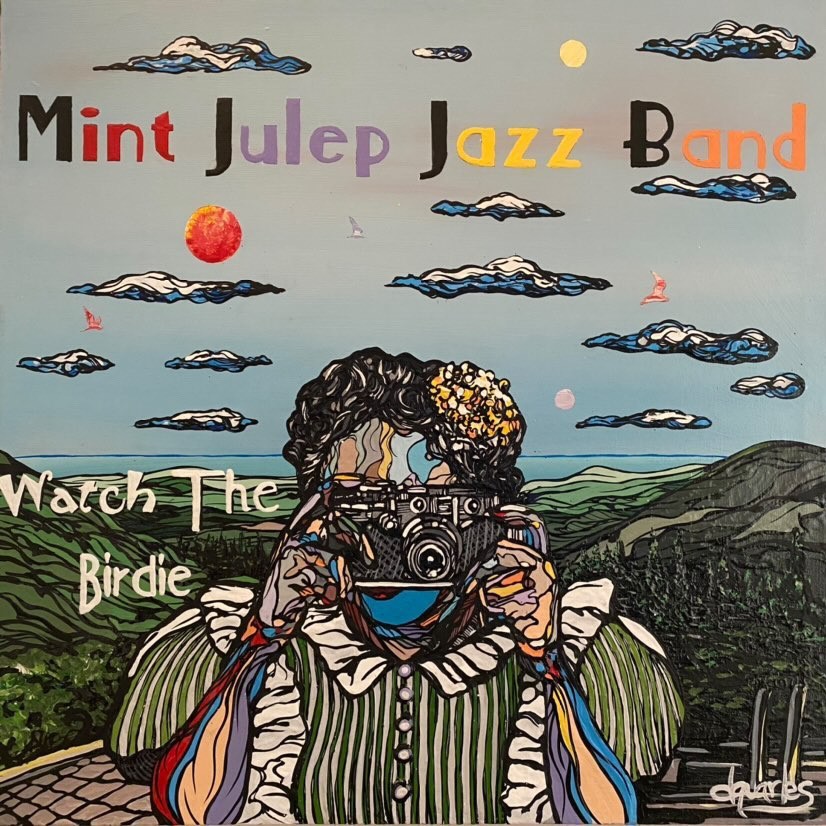
TL/DR: The Mint Julep Jazz Band is recording our third album, Watch the Birdie, and the Kickstarter launched today for pre-orders and swag!
Our incredible album artwork for Watch the Birdie by Durham-based artist Darius Quayle’s
When I was young, I wondered why each subsequent band album seemed to have more and more years between albums, but now I understand. When a band does well, they are busy, then the members are busy contributing to other endeavors, and then people need a break after being so busy, so the thought of a new album is definitely lower on the priority list, particularly when other work is steady.
In 2020, we decided that 5 years was enough time gone by since the release of Battle Axe and that we should record another album. You know how the rest of this story goes with the global COVID-19 pandemic essentially putting a halt to life as we knew it.
We scheduled this recording a couple of times during the pandemic and had to keep pushing it back, but we believe it’s for real this time, so we are launching a Kickstarter today for album pre-orders and swag. I know some of you have told me that you need a new tee shirt, so we got you! I’m also excited to add enamel pins, Burt’s Bees, a sponsorship option, and some quality time noshing with yours truly as rewards, in addition to some of our recurring rewards.
What will this album be? It’s a dance album, of course, but it’s also the culmination of efforts aggregated just prior to the pandemic that still feel new to us, plus some new-to-us arrangements created during the pandemic, and some old favorites that should be put on tape. The project feels fresh to us, so we hope you enjoy it as we slowly re-open our jazz dance and music community.
It’s also a celebration of our 10th anniversary as a band! Our first gig was in February of 2012 at the (now defunct) Hot Club of Durham weekly swing dance in the Trotter Building in Durham’s DIY district. I look at videos of that night and think about how far we’ve come, but also how we did a respectable job for a very first gig. It’s been a wild ride and we thank you for all the wonderful musical experiences we’ve shared since then.
Visit our Kickstarter page for more information about the tracks on the album, swag, and how to get your copy/copies of our recordings – we’re offering digital, CD, and vinyl this time!
Picking up where we left off, we cautiously move back into position, changed forever, but hopeful that our community can once again be together in a meaningful way. While Lindy Focus may more likely resemble a regional Lindy exchange this year, I have a feeling that the impact will still be strong, particularly for those of us who are still working from home and whose scenes are not running regular dances yet.
Per usual, I am most excited about the music – the musicians and bandleaders this year are all from North Carolina! Our state has a history of producing incredible jazz musicians (Coltrane, Simone, Monk, to name a few) and, for the modern swing dance community, you are already familiar with several bands based in NC – Michael Gamble and the Rhythm Serenaders, Keenan McKenzie and the Riffers, and the Mint Julep Jazz Band. We’ll have some new-to-you faces that we’re excited for you to hear (including bandleader Sean Mason!) and I’m sure there will be some new-to-you tunes that we’ve added to our books during the pandemic.
Above all, be safe – Lindy Focus will be requiring masks/vaccinations and we’ll have to do air hugs, but it will be so good to see any number of you and share in the collective and creative energy that has been missing for so long.
If Lindy Focus is not in your risk budget, we all understand and we’ll see you again in the future – if it is in your risk budget this year, registration is open, the hotel is taking bookings, and I’ll see you soon!
The remote recordings continue with the release of Remote Riffing: Volume 2 (CalBal Live), an EP of the five tunes Keenan McKenzie assembled for the CalBal Live virtual Balboa workshop in January, 2020. I’m singing on two tracks, both original swing tunes written by Keenan McKenzie – If I Wrote a Song for You with Keenan McKenzie and the Riffers and Transcontinental with the Keenan McKenzie Orchestra. I have previously recorded both of these songs for Keenan’s album Forged in Rhythm, but it was fun to revisit these, perform them now that I’ve had them under my belt a couple of years, and hear the new arrangements, particularly Transcontinental with a big band! Please go to Keenan’s Bandcamp page and check out the incredible lineups of musicians for each song – I know we have been weary of this pandemic for some time, but this is one of those silver linings, essentially being able to record anywhere and have someone create this alchemy of recordings.
If you say CalBal three times fast it might come out sounding like cowbell at the end – hence this tune is a pun on the event’s nickname. We’d been looking for pitched cowbells for years, online an at music stores, and it took a pandemic Zoom cocktail hangout for the topic of almglocken to come out. Thanks to Jonathan Stout for the suggestion, we think they worked out great! Here’s our rendition of Johnny Blowers’ Cowbell Serenade, sponsored by Gary Chyi.
I’M GONNA SIT RIGHT DOWN AND WRITE MYSELF A LETTER
This is an original arrangement of I’m Gonna Sit Right Down and Write Myself a Letter, written by Lucian Cobb, with vocals inspired by the Boswell Sisters. Thanks so much to Kevin Wang, Lian Tarhay, Ursula Hicks, Kevin Nguyen, Matt Mitchell, and Jennifer Reed, all swing dancers in Austin and Dallas, Texas, who joined forces to sponsor this song for CalBal Live.
When we started talking to the CalBal Live organizers it became clear that they were excited about everything the bandleaders proposed and were up for funding big band charts. While the Mint Julep Jazz Band isn’t a big band, Lucian really wanted to do a big band song because it would be fun to put together. He had already transcribed Raggin’ the Scale (from an Ella Fitzgerald and her Famous Orchestra live recording from the Savoy Ballroom) for Michael Gamble and the Rhythm Serenaders Orchestra and Michael gave his blessing for us to record Lucian’s transcription, so here we are! Thanks so much to Pasadena Balboa and Jam for sponsoring Raggin’ the Scale, this song is an absolute blast.
In an alternate timeline I would be boarding a plane this Friday morning to fly to Los Angeles to spend Labor Day weekend days poolside at the LAX Marriott and evenings DJ’ing and singing with my band and Michael Gamble and the Rhythm Serenaders at Camp Hollywood. In our current timeline, Hilary Alexander has put together an incredible weekend of competitions, classes, discussions, and music for a Virtual Camp Hollywood that will be streamed on YouTube for free and classes/events will be donation-based! Find the entire event streaming on the Camp Hollywood YouTube channel, starting at 8 p.m. PDT/11 p.m. EDT this Friday, September 4, 2020 through Monday, September 7, 2020.
I’ll be kicking off the music for the weekend with a DJ set on Friday from 8-10 p.m. PDT/11 p.m.-1 a.m. EDT, you can find me as part of the Bandleader Summit with Jonathan Stout and Michael Gamble on Sunday, September 6, 2020 from 4-5:30 p.m. PDT/7-8:30 p.m. EDT, and at some point over the weekend the Mint Julep Jazz Band will have a little surprise for everyone – tune in!
One of the silver linings to the pandemic is that there are lots of opportunities to listen to music, both online and from my collection – let’s combine the two, shall we?
On Thursday, July 30, 2020 I’ll be taking another spin for the Global Online Social, an ongoing pandemic music series that runs every Thursday featuring swing DJs from around the globe. Tune in from 9 p.m. to 11 p.m. EDT for my set, tune in all day starting at 1 p.m. EDT for even more music.
On Sunday, August 9, 2020, I’ll be the featured DJ for Swing it Blue!, a series of Zoom parties featuring swing/blues DJs spinning tunes while participants (maybe you?) handwrite letters to swing-state voters who are likely to vote Democrat asking them to vote in the upcoming election. This method has been proven to be one of the most effective means increasing voter participation and many of the letter recipients will be from historically underrepresented groups. I’ll be DJ’ing for the letter writing party on August 9 from 7 p.m. to 8 p.m. EDT. For more information, visit the Facebook invite (for my date) or the Facebook group and its About page/FAQs (more general information and all the dates/invites)







 In an alternate timeline I would be boarding a plane this Friday morning to fly to Los Angeles to spend Labor Day weekend days poolside at the LAX Marriott and evenings DJ’ing and singing with my band and Michael Gamble and the Rhythm Serenaders at
 Laura Windley